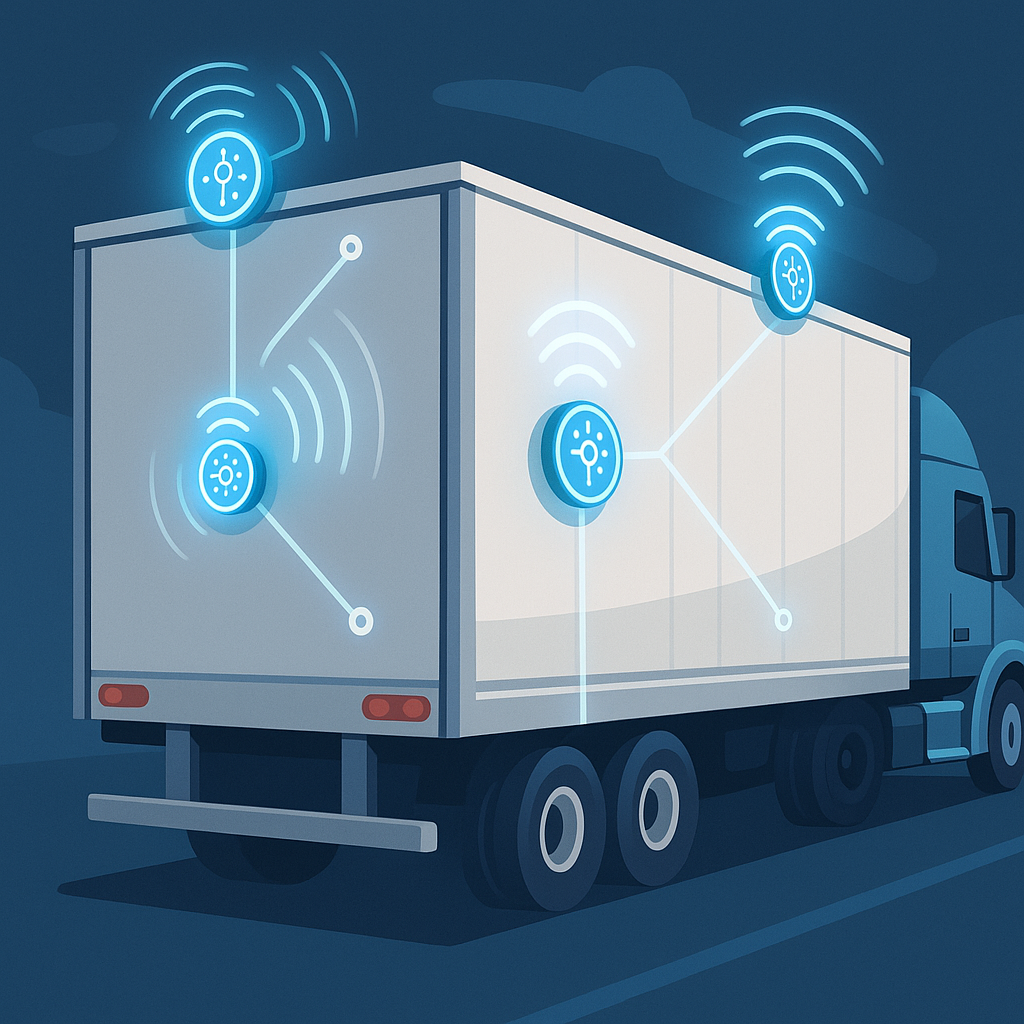
The only way to keep it in a good run is to stay absolute top with the new equipment. You need to use dry van tracking tools, the latest generation. It is the logistic code of Milwaukee. Innovative tracking solutions for dry van operations have come a long way, and they have been truly revolutionary in changing the way things are done in the Cream City.
1. IoT Sensors
Tiny, low-cost IoT sensors are changing the game for fleets which to watch both trailers and load compress. They can be placed on doors, walls, or even on individual pallets. Heat sensors can measure temperature, humidity, light penetration, and door events. For sensitive cargo operators, like those in electronics or pharmaceutical sectors, it will prevent them to lose plants, accept that something is stolen or miss the compliance timelines. IoT sensor data are integrated perfectly with fleet’s central systems to alert the dispatchers a second later than door ajar or reached a temperature threshold.
2. RFID Tags
RFID tags can automate check in, allowing the staff to speed up the yard by scanning bar codes automatically with the help of handheld devices. Scanning the barcodes manually in the traditional way is unnecessary as drivers and dockworkers only need to pass equipped handhelds or drive through passive RFID portals to register hundreds of pallets in seconds. This way, it will short time the luggage boarding and reduce the misplaced cargo issues. When Midwest routes are tight due to schedule and loading, the instant visibility to what’s on each trailer becomes a game-changer.
3. Blockchain Logs
Triggered by the unique characteristics of a distributed ledger, the digital blockchain logs are perceived as gaining a competitive advantage for both shippers and carriers. Confirmation of deliveries, status updates — like pickup, warehousing, customs inspection, and delivery — are all recorded on the distributed ledger, thus, ensuring a valuable, immutable shipment memory for all the parties involved. This is unique especially for electronics, or regulated loads moving from Milwaukee to border points. Blockchain logs enhance security, simplify audit trails, and promote trust between carriers and brokers.
4. Telematics & Mobile ELDs
Conventional GPS has left place for the newest telematics, which are the result of merging information about location with information about the engine, fuel consumption, and driver behavior. Fulfilling the Hours‑of‑Service requirements while at the same time feeding valuable data into your fleet tracking innovation suite with integrated telematics and mobile ELDs (Electronic Logging Devices) is genius. Tools like geofencing that are created to track cars will automatically log the arrival and departure times, thus, there will be no need for manual work. Even small companies — such as HMD Trucking — are embedding telematics/ELD hardware together to save paperwork and focus on deliveries there is time for. If you’re interested in joining a tech-forward fleet, check out these lease purchase trucking jobs in Atlanta.
5. Driver Wearables
Driver wearables, such as smartwatches or biometric wristbands, can monitor drivers’ health and make them aware of the health in real time. Those devices are programmed to detect fatigue patterns through analyzing heart-rate variability, they can send alerts for the drivers to take rests, as well as, they can sync with dispatch systems to propose route changes based on the driver’s state of conditions and load priority. This not just improves safety and compliance, but it also helps the driver retention by the way of wellness programs.
6. AI Predictions & Data Analytics
Information coming from GPS tracking can be used for later management only if you use AI predictions and data analytics. Machine learning models can predict delays more reliably by looking at historical traffic, weather, and tender rejection trends. Furthermore, predictive maintenance algorithms reveal service before a breakdown occurs by regurgitating engine codes and mileage. Original equipment manufacturers’ (OEM) dashboards visualize key performance indicators (KPIs) — such as on‑time performance, dwell times, cost per mile — so fleet managers can see weaknesses straight away. This type of proactive management turns the reactive mode into the planned mode.
7. Cloud Dashboards & Integration Platforms
A responsive structure of products necessitates the support from strong cloud dashboards and integration platforms. Merging the information obtained from IoT sensors, RFID reads, blockchain logs, telematics, mobile ELDs, and wearables, the user will be hitting the one-stop-shop for total visibility. Customizable alerts, role-based access, and friendly mobile interfaces ensure that everyone from managers in dispatch to executive leadership gets the information they need. Moreover, the integration platform also connects to TMS and ERP systems, thus, it reduces the duplication of entries and makes the processes of billing, compliance, and customer notifications easier.

Table 1: Overview of Key Tracking Tools
| Tool Category | Key Feature | Primary Benefit | Example Application |
| IoT sensors | Environmental & door-status monitoring | Preserve cargo quality, prevent theft | Pharma & electronics lanes |
| RFID tags | Bulk inventory reads | Speed up yard ops, reduce manual scans | Cross-dock terminals |
| Blockchain logs | Distributed, tamper-proof chain of custody | Audit trails, enhanced trust | High-value/import shipments |
| Telematics & mobile ELDs | GPS + engine/fuel/driver data | Compliance, fuel savings, route optimization | Regional & long-haul fleets |
| Driver wearables | Biometric fatigue & health tracking | Safety, wellness, compliance | Driver retention programs |
| AI predictions & data analytics | Predictive delay & maintenance alerts | Proactive decision-making, cost control | Capacity planning |
| Cloud dashboards & integration platforms | Unified visibility & API connectivity | Streamlined operations, real-time alerts | End-to-end TMS integration |
Conclusion
The usage of dry van tracking tools is not just about renewing IT equipment — it is about embracing the continuous improvement culture and the data-driven decision-making culture. The Milwaukee carrier tech will be more beneficial for fleets relying on fleet tracking innovation as it will allow them to achieve better service quality, lower operating costs, and more satisfied customers. Leading the run with the use of IoT sensors on newest trailers or rolling out AI‑driven analytics across your network, the future of dry van operations belongs to those who track smarter, not harder.

Most Commonly Asked Questions
- What is the role of IoT sensors in Milwaukee’s dry van fleets?
Real‑time monitoring of temperature, humidity, light penetration, and door events are functions of IoT sensors which implies the plants will not suffer cargo losses due to their sensors preventing theft or informing dispatchers instantly to any irregularities. - What is the impact of RFID tags in the yard operations of dry van carriers?
Passive RFID portals and hand‑held scanners register hundreds of pallets in seconds, without the need for manual barcode scans, hence reducing loading time, and instance of misplaced cargo. - What are the blockchain logs in the tracking solutions of carriers?
The IoT sensors enable the distributed ledger to create immutable records of start, store, customs inspections, and end observance thus increasing the security, the audit trails, and the trust of the shippers on the carriers. - What wearable devices can help the drivers to turn their tiredness into alertness?
Want to know how to prevent fatigue‑related incidents with driver wearables? Biometric wristbands and smartwatches detect fatigue patterns that are linked to users’ heart‑rate variability, send notifications to rest, and receive information from dispatch to recommend routes based on the driver’s life state. - What additional benefits do AI predictions and data analytics offer?
AI technologies besides the Estimated Time of Arrival (ETA) can give some hidden insights through predictions and data analytics. For example, traffic jams, bad weather, tender rejections, and vehicle maintenance are all patterns that can be analyzed by machine learning to predict delays and help avoid accidents. - How do cloud dashboards and integration platforms address the challenge of visibility?
The integration of data streams of IoT sensors, RFID, blockchain logs, telematics/ELDs, and wearables into custom and role‑based interfaces shapes the end‑to‑end visibility and sorts the TMS and ERP workflows. - Will the implementation of blockchain logs be able to solve the disputes between shippers and carriers?
Certainly; the use of a distributed ledger with immutably recorded shipment data makes miscommunication nearly impossible and also provides the verifiable evidence of every stage, cutting audit costs and conflicts. - What mistakes should fleets avoid in the implementation of several tracking technologies?
Avoiding data overload and integration complexity by the phased tool implementations, standard data formats, good user training, and system operations serving a clear purpose are the common mistakes fleets should not fall into during the implementations of multiple tracking technologies.