The hydrogen corridor, specifically the South-Central hydrogen corridor, is likely to completely revolutionize long-haul diesel fuel economics in the U.S. With more than $100 million in public-private investment, this infrastructural project is going to build the long-haul transportation chain that involves the production and distribution of hydrogen fuel quickly and reliably. These initiatives are altering the energy landscape from being completely reliant on fossil fuels to being more sustainable as they harness renewable resources and provide a cost-effective pathway for heavy-duty fleets.
The article examines how the changes in the hydrogen corridor make the logistics of long-haul trucking more favorable, what the South-Central initiative is and what it means for the fuel direction in the future. In such light as a progressive transportation fleet operator, Leadgamp is adapting its logistics and depot plans in order to benefit from the course-changing shift to hydrogen.
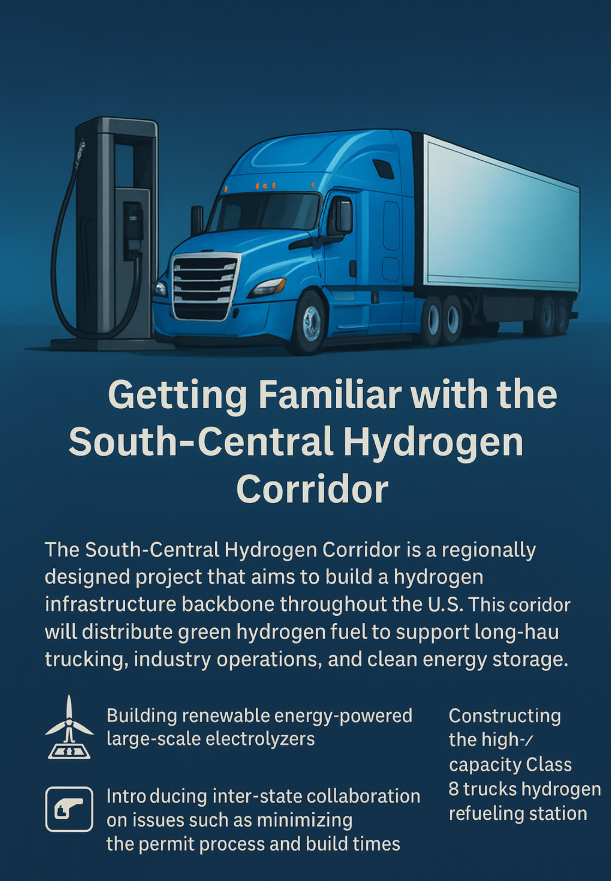
Getting Familiar with the South-Central Hydrogen Corridor
The South-Central hydrogen corridor is a regionally designed project that aims to build a hydrogen infrastructure backbone throughout the U.S. This corridor will distribute green hydrogen fuel to support long-haul trucking, industry operations, and clean energy storage.
The corridor’s goals include:
- Building renewable energy powered large-scale electrolyzers
- Constructing the high-capacity Class 8 trucks hydrogen refueling stations
- Introducing inter-state collaboration on issues such as minimizing the permit process and build times
- Encouraging the private sector to invest in fuel networks that reduce emissions
This $100 million project will not be only about fueling trucks — it will change the entire dynamics of fuel transportation and logistics management.
The Importance of Hydrogen Solutions for the Long-Haul Sector
Increasing hydrogen long-distance transportation offers various advantages:
- Greater kilometer range and refueling in a much shorter time of 10–15 minutes
- Improved environmental standards since there are zero emissions in discharges during use of the renewable hydrogen fuel
- Equal and diversified energy sources
Since the hydrogen could be stockpiled and deployed whenever it is needed, it is the major part of making fleets more resilient and less dependent on the volatile energy market. As the production of hydrogen increases and the infrastructure ex pands, it is highly probable that hydrogen will not only be cheaper but also a more reliable option than diesel in the long-term routing. In parallel, a truck driver hire agency can support this transition by sourcing qualified drivers trained to operate alternative-fuel vehicles, helping fleets adapt smoothly to hydrogen-powered operations.

The Economic Transformation: A New Look at Long-Haul Fuel
The localization of hydrogen corridor branching is going to have a highly positive impact on the fuel economics in trucking. The corridor also provides:
- A more affordable cost-per-mile in the long-distance operation of the fleet
- Shorter time because of refueling being done in a snap
- Less overhead on maintenance as compared with combustion engines
- The access to state and federal green energy credits for the fleet
Transportation companies will be able to predict better their profit margin situation as fuel prices become more consistent and the emissions decrease.
Where the $100 Million Goes
The funding of $100 million is going into four key elements:
Hydrogen Production Plants
Electrolyzers will generate green hydrogen using renewable wind and solar energy. At larger scales.
Refueling Infrastructure
Containerized high-pressure dispensers with more than one nozzle will be installed in major freight routes to power up several vehicles simultaneously.
Pipeline Development and Freighting
The hydrogen will be transported via pipelines and trailers to provide access in rural and urban areas.
Safety and Workforce Development
A part of the investment is targeted at safety protocols, technician training, and the cross-regional coordination of permitting and grid access.
Global and National Context
The South-Central hydrogen corridor is an element of a more global transition. Many European and Asian countries are establishing hydrogen ecosystems in freight transport, air travel, and shipping to de-carbonize them. In the U.S., parallel corridors are being appraised on the West Coast and Northeast — with the South-Central absolutely leading because of having a central location, an industrial base, and a promising renewable energy source.
Hydrogen Depot Design: The Transition is on the Way
The design of depots must be transformed so that they can hold refueling of hydrogen and store brake vehicles. The significant changes would be:
- High-capacity storage tanks should be gaseous or liquid hydrogen
- Safe refueling bays with proper ventilation and pressure control
- Renewable aided energy integration (solar panels, batteries)
- Smart energy management systems to handle variable supply and demand
Leadgamp is already on board with experimenting on the pilot depot transformations that resonate with these design trends — especially in the areas where the hydrogen corridor is projected to be.
Leadgamp’s Hydrogen Roadmap
Being one of the quick movers in eco-friendly freight, Leadgamp is:
- Cooperating with hydrogen fuel suppliers for long-term pricing security
- Doing lane assessments and recommending hydrogen-ready routes
- Training operators as well as mechanics concerning fuel cell technology
- Investing strategically in dual-fuel or hydrogen-only trucks for pilots
- Promoting the introduction of policy incentives that arm the costs
These initiatives help Leadgamp stay ahead of the game in the transportation sector and at the same time have a positive impact on the future fuel economics.
What It Means for Fleet Operators
Fleets need to be well equipped though. They have to:
- Plan the operational routes that comply with the corridor development
- Estimate the ROI for a hydrogen truck in comparison to diesel and electric alternatives
- Rebuild or retrofit the depot for hydrogen security management
- Foresee the transition of their workforce into new roles such as clean energy maintenance
- Collaborate from day one with the infrastructure partners to ensure that they will have access to the refueling facilities
For companies that are dragging their feet there is a big risk on the table, like the competitiveness of their business due to the fuel dynamics changing and the pressure from the carbon policies.
Advantages for All
The hydrogen corridor is not just about the environment:
- Job creation in sectors such as engineering, construction, and maintenance
- Regional economic growth through energy hubs
- Increased demand for renewable energy for the production of green hydrogen
- It is about national energy independence too, and of course, the decarbonization goals are supported
Freight, fuel, and regional development is a holistic vision for the transformation of infrastructure.
Even Though Hydrogen Adoption Has Great Potential There Are Some Challenges:
High CapEx
Paying a hydrogen truck and depot upgrades is a significant cost. But in the long-term there can be savings in O&M that are really worth it and plus you might get some incentives.
Infrastructure Gaps
Some of the early adapters will not have adequate coverage. The best move is a strategic alliance with public and private sides.
Technology Advancement
Hydrogen technology is undergoing rapid change, and companies need to grow with trustworthy OEMs and suppliers.
Leadgamp turns to pilot projects, modular deployment, and staged investment as the solutions to these risks.

FAQ on Hydrogen and Long-Haul Fuel Economics
What is the South-Central Hydrogen Corridor?
It’s a $100 million initiative to set up hydrogen fuel production, distribution, and refueling infrastructure across the central U.S. states.
Why is hydrogen good for long-haul trucking?
Hydrogen gives the truck long driving distances, fast refueling, and no emissions — great for high-mileage, time-sensitive operations.
Will hydrogen fuel be cheaper than diesel?
In the long run, yes indeed. As the green hydrogen production process becomes more efficient, the infrastructure improves, the cost per mile for the fuel will decline significantly.
How will this redesign the depot?
The depot will be required to supply hydrogen storage, specific refueling stations, and smart energy systems to offset the high demand.
Is Leadgamp going hydrogen?
Certainly. Leadgamp is dealing with hydrogen-compatible truckstesting, retrofitting depots, and forming supply chain partnerships to track the coalition.
Final Thoughts
The hydrogen corridor is more than a route — it is a revolution. The South-Central hydrogen program is creating long-hauler hydrogen fuel line economics forever with $100 million in backing and increasing industry support.
Leadgamp and other companies are bettering up for this new form of energy. All it takes is a smart infrastructure plan and early investment, then fleets will take the first place in the new stage of the vehicle industry.